
Multisensory learning
Seeing it. Hearing it. Doing it.
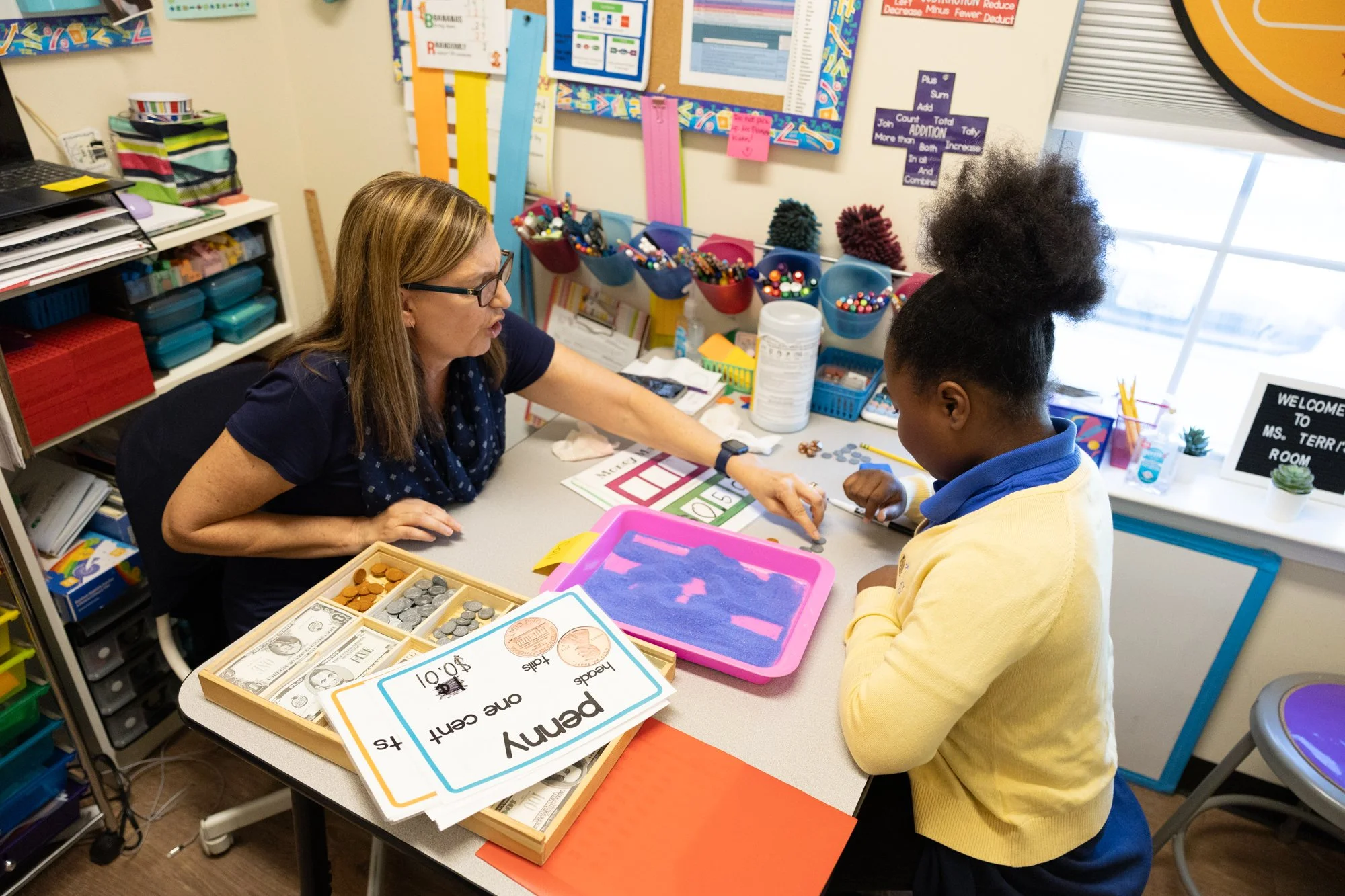
Children with dyslexia and language-based learning differences retain new skills when they engage multiple senses at once. Reading a word. Hearing the word. Tracing the word. Building it with letter tiles. Saying it aloud. Writing it. The brain locks information in faster when more pathways are firing.
WHAT MULTISENSORY MEANS AT LEGACY
Multisensory instruction is not a separate class at Legacy.
It is the default mode of teaching in every subject.
Reading lessons use letter tiles, sand trays, and air-writing. Math lessons use manipulatives, body movement, and visual sequencing. Science lessons happen with hands in the soil and eyes on the experiment. Every classroom is designed for instruction that engages more than one sense at a time.
BEHIND THE PRACTICE
Legacy faculty are certified across several multisensory programs, including Orton-Gillingham, Lindamood-Bell’s Visualizing and Verbalizing, On Cloud Nine, Seeing Stars, and the Lindamood Phoneme Sequencing Program.
The faculty selects the right program for the right student. The conviction across all of them is the same: the brain learns best when the body is involved.
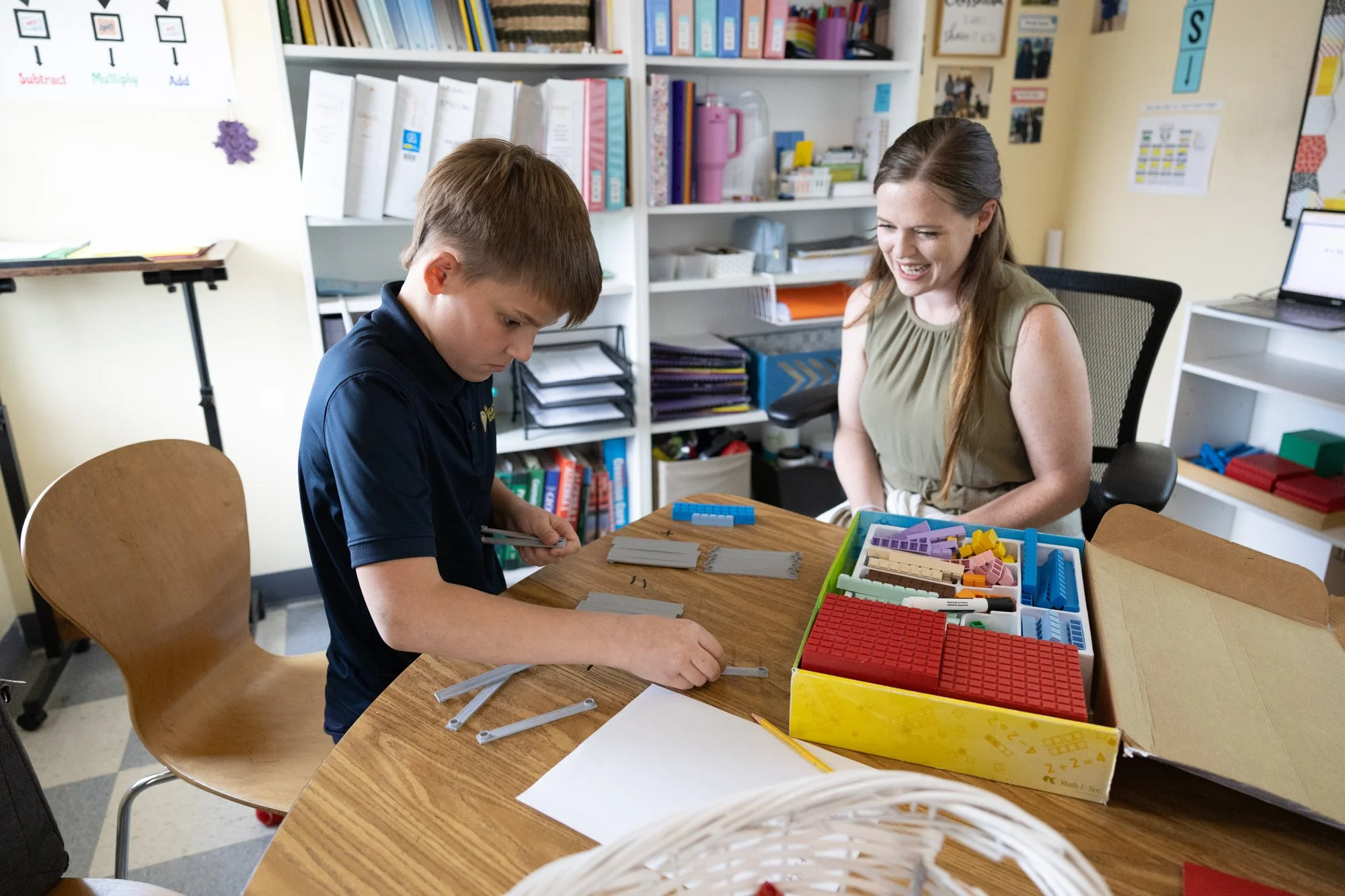
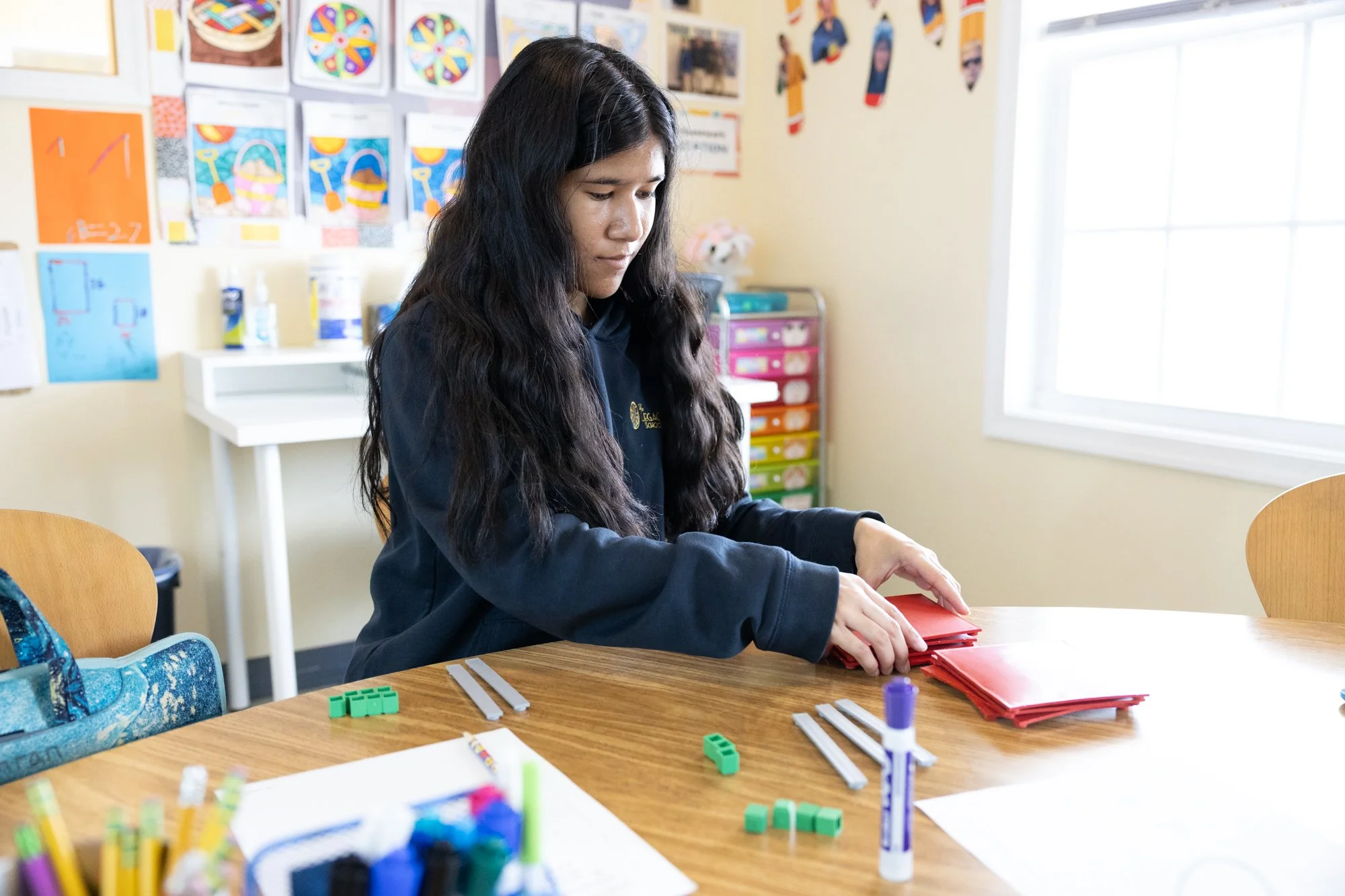
"They utilize a lot of hands-on and tangible things that really engage students with language disabilities. They meet each kid where they are."
— Stephanie R., Legacy parent
COME SEE LEGACY FOR YOURSELF
Most families know within ten minutes.
The best way to understand Legacy is to walk through the door.